
Kverneland Siloking SelfLine 4.0 System 500+
Bale Chopper | Mixer / Feeder
The all-rounder for fast road travel and narrow farmyards
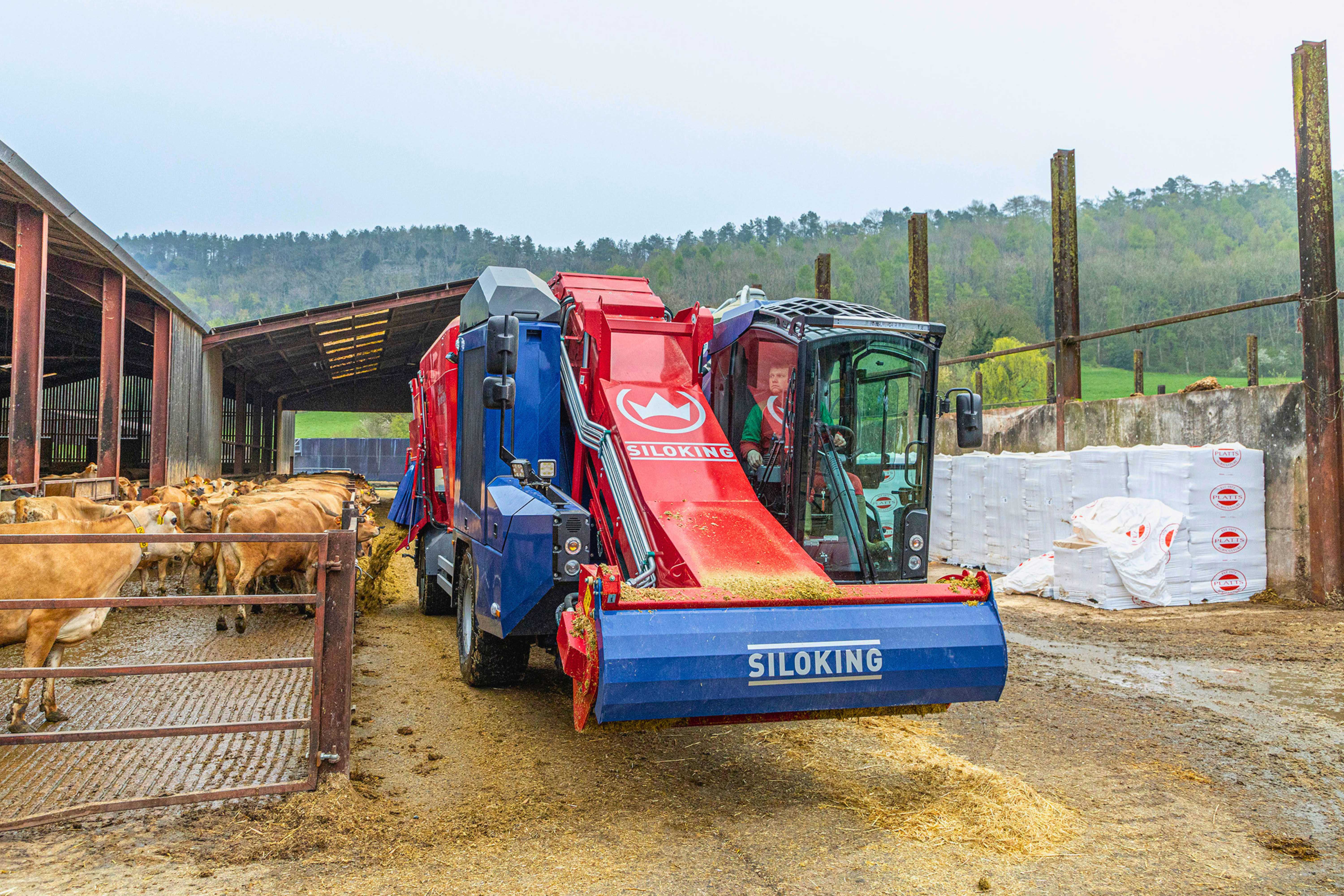
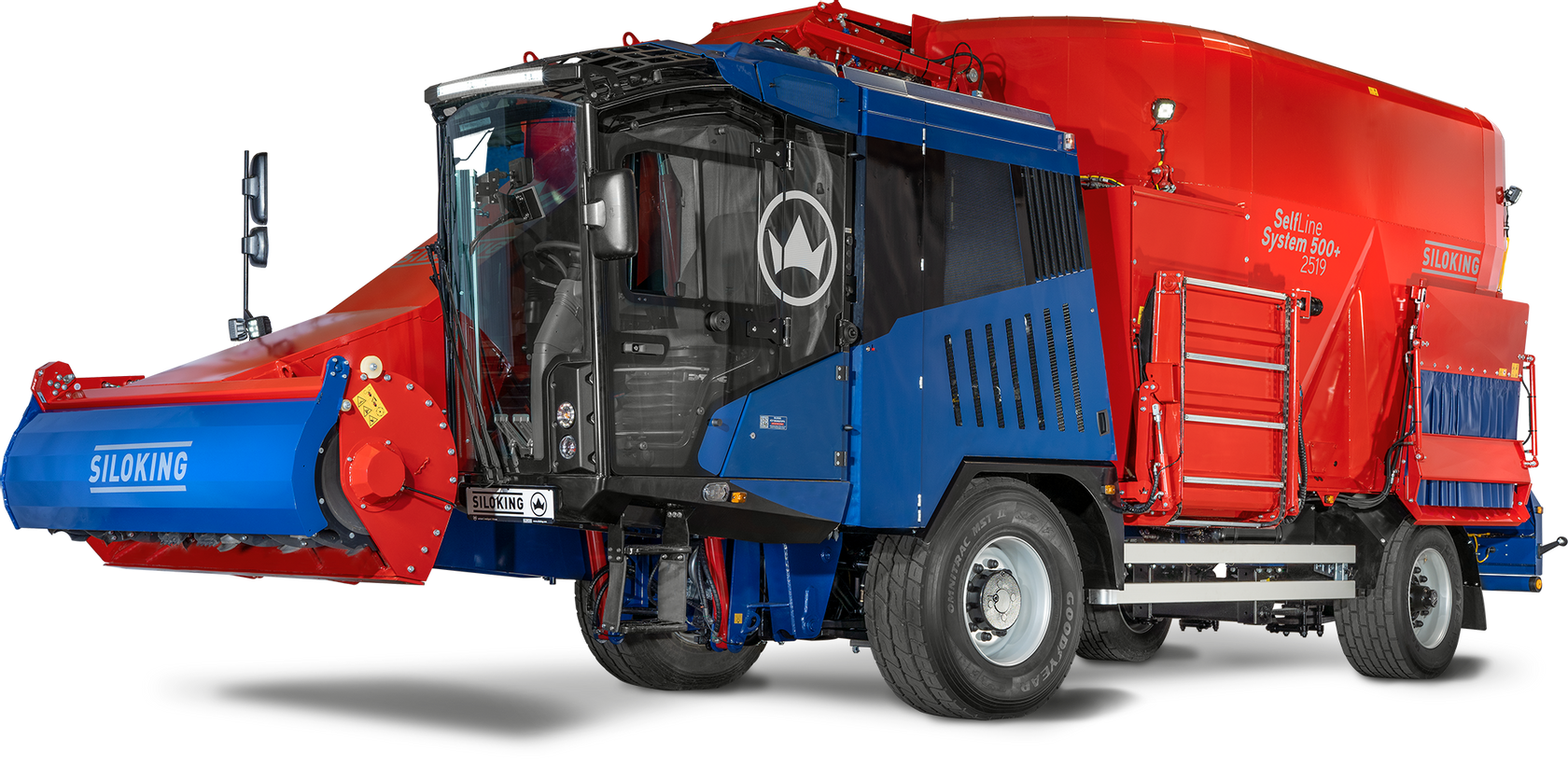
The Kverneland SILOKING SelfLine 4.0 System 500+ is the all-round self-propelled feed mixer for multi-location dairy farms and contractors. With hopper volumes from 19 to 25 m³, low overall height and excellent manoeuvrability, it combines fast road travel with easy operation in confined farmyards.


Description
The Kverneland SILOKING SelfLine 4.0 System 500+ is designed for farms and contractors who require a fast, flexible and extremely manoeuvrable self-propelled feed mixer for both road and yard use. Hopper volumes from 19 to 25 m³ provide ample capacity for daily feeding tasks.
With an overall height of less than 3 metres, the System 500+ passes easily through low barn entrances. The powerful Volvo 6-cylinder engine with 185 kW (252 hp) is built for continuous heavy-duty operation and allowws the feeder to move quickly from silo to feed table while still fitting into challenging farm layouts. Four-wheel steering and two steered axles ensure outstanding manoeuvrability on narrow farm roads and in tight yards.
The SelfLine 4.0 System 500+ is available in four speed versions – 20, 25, 40 or 50 km/h – allowing the machine to be perfectly matched to individual transport requirements.
Features
Features

The Kverneland SILOKING SelfLine 4.0 System 500+ is designed with operator overview and feeding comfort in mind. The cab provides good all-round visibility, a clear view upwards to the milling area and a working layout that keeps key information close to the driver.
The Feed Table Management system simplifies the discharge process by automating several hydraulic functions. Instead of manually operating each step, the operator can activate sequences such as extending the conveyor, switching it on and opening the discharge door. This improves workflow, reduces operator workload and supports consistent feed placement.
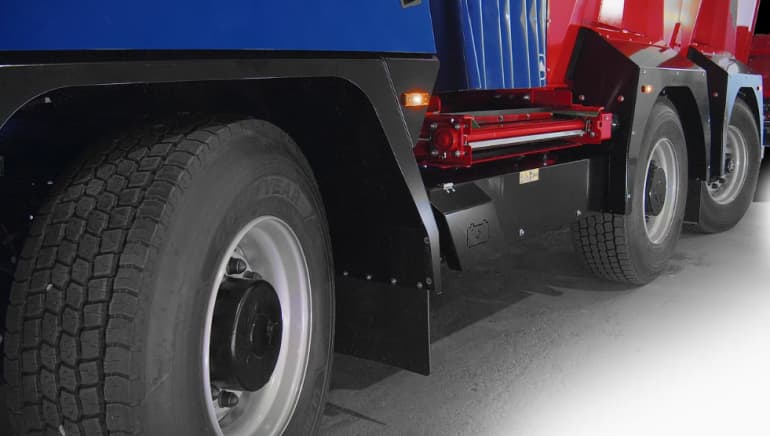
The Kverneland SILOKING SelfLine 4.0 System 500+ uses four-wheel steering to achieve excellent manoeuvrability in narrow and angled yards. The tight turning radius helps the operator position the machine accurately at the silo, around buildings and along the feed table.
For road transport, the machine can switch to front-wheel steering for stable driving. When working on unpaved surfaces, slopes or difficult ground, optional all-wheel drive helps maintain traction. This combination gives the machine both road efficiency and strong yard performance.

NIR - Near InfraRed Spectroscopy
Feeding based on reliable data
Precise control of the feed ration supports herd health, feed efficiency and consistent milk production.
Visual assessment cannot consistently guarantee maximum milk yield from every kilogram of dry matter.
With Kverneland SILOKING's NIR System mounted at the front of the self-propelled milling head, you can monitor feed composition, rather than relying on estimation.
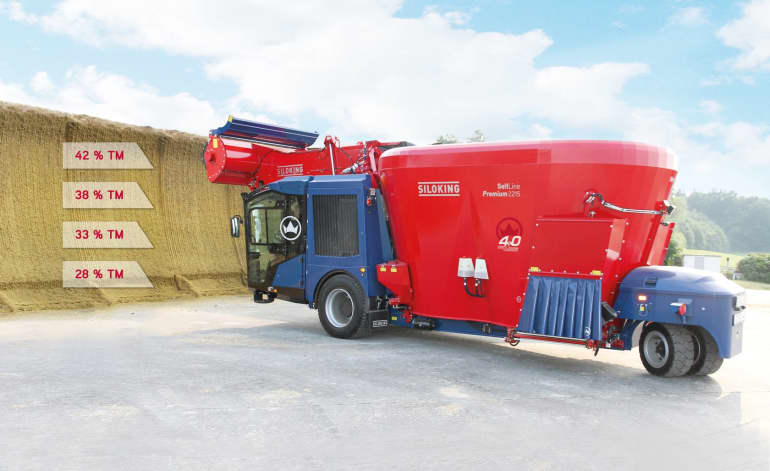
It pays to take a close look at the quality of the basic forage, ideally at the time of silage removal. Kverneland SILOKING's solution to this task is Near Infrared Spectroscopy (NIRS).
This technology, which is available as an option on all Kverneland SILOKING self-propelled machines, makes use of near-infrared light to analyse the dry matter of the forage components. It enables continuous, non-contact and non-destructive real-time analysis. (This equipment can also be retrofitted.)
As dry matter content can vary significantly within the silo, accurately calculated feed rations are essential.
An incorrectly calculated feed ration brings four major disadvantages:
- Lower feed efficiency
- Metabolic issues for the cow
- Varying milk yields
- Higher amount of feed residue
With Kverneland SILOKING SelfLine, you can avoid this expense, and have a great impact on your profitability.
The Kverneland SILOKING NIR System delivers reliable data for more accurate rations, greater control of herd health and consistent milk production. The NIR System offers particular advantages for silos with layers of feed of different origins and specific weights. As opposed to random dry matter measurement, the system can accurately adjust during feed removal based on the values measured in real time. It knows the dry matter content of the basic feed fed in and can adapt the planned target component.