Winter can do strange things to machinery and equipment. More so if the kit has spent winter sat outside, and is then expected to work perfectly when the time comes to drag it from the weeds.
When it comes to mower conditioners, a little time spent making visual checks, cleaning and freeing-up slip clutches ahead of greasing, checking and/or changing oils, could pay dividends with in-season reliability.
And there’s much to consider when it comes to mower conditioners. From pto shafts and slip clutches, to conditioner drive belts blades, there is much to consider.
Kverneland product manager David Perry says an easily over-looked area to check is lift arm length and tractor tyre pressures. While the effects of uneven measurement are easily masked with trailed kit carried on the lower links, the problem is more pronounced on mounted mower conditioners. Measure lift rod lengths and tyres pressures, ensuring both sides are identical. And don’t forget to check tyre pressures on a trailed mower conditioner.
But before you reach for the operator’s handbook and consider opening guards, apply the tractor handbrake, chock the wheels if checking a trailed mower, and remove the tractor’s ignition key to prevent accidental start-up.
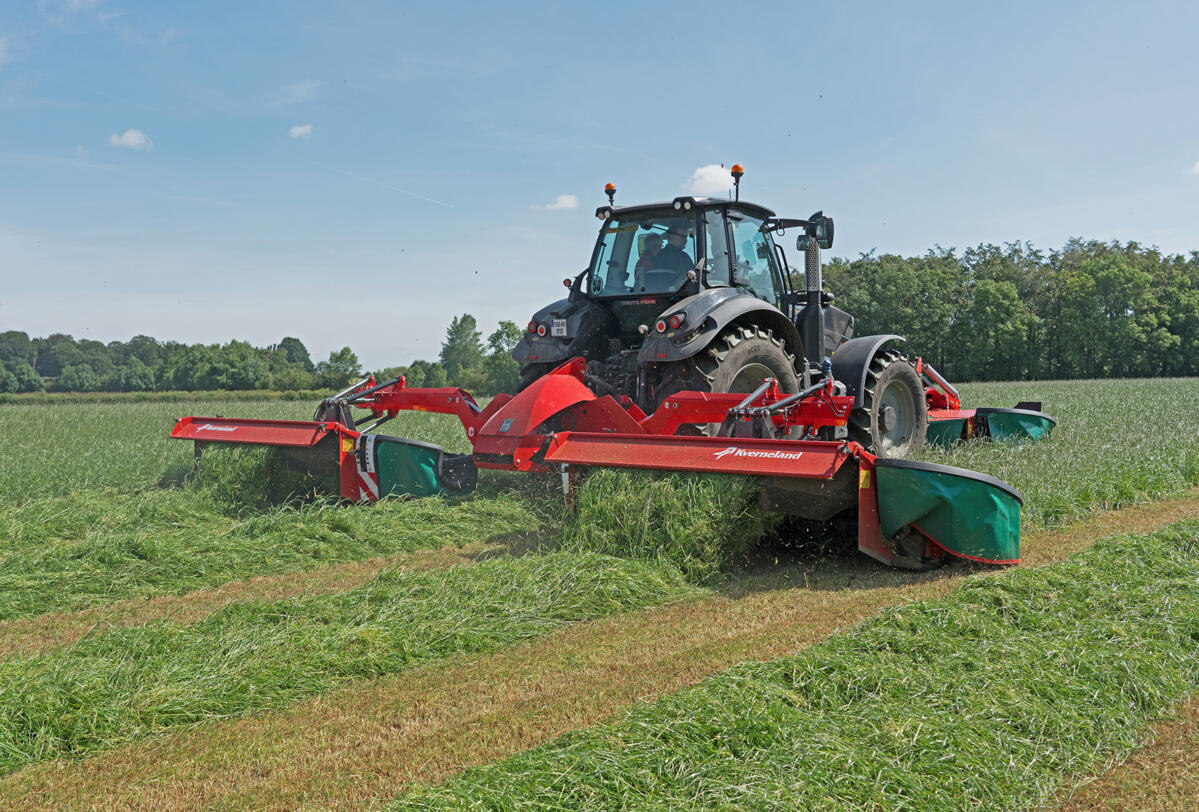
Kverneland 5387MT triple mower conditioner
This Kverneland triple mower uses a front-mounted 3332FT and a rear-mounted 5387MT. Its 8.7m cutting width comes from three, eight-disc cutting beds equipped with twin-bladed discs.
Each carries a semi-swinging steel tined conditioner that can be run at 700rpm for leafy crops or 1000rpm for heavier grass swards. Swath boards allow the front mower to drop grass between the tractor wheels, with the rear units able to swath or spread.
Conditioning effect can be adjusted by tweaking the front and rear of the conditioner hood through five individual settings. “The front section is for crop volume, and the rear is for conditioning intensity,” says Mr Perry.
Where the front mower uses spring suspension for its bed damping, the rear units get the firm’s QuattroLink race car derived hydraulic bed suspension. The correct pressure rewards with smooth float and a consistent cutting height.

Check conditioner vee belts
Kverneland uses a combination of three vee-belts to drive its conditioning rotor. Remove the guard to gain access to the conditioner belts, to check for splits, cracking and signs of failure. Slacken the spring to loosen the belts and clean any debris from inside the pulley V’s. These models simply need a pre-load on the belt tensioner, achieved by aligning the top of the spring retainer with the top edge of the adjacent plate – as indicated by the decal on the guard.

Dipstick helps oil checks
Gearbox oils should be replaced annually, with this conditioner-drive gearbox benefitting from an integral dipstick attached to the filler plug. Markings at the bottom of the dipstick show minimum and maximum level markings. A short, telescopic driveshaft sits below this gearbox and transmits power down to the mower bed. Importantly, this shaft carries a grease nipple, that is accessed behind a flip-up cover.
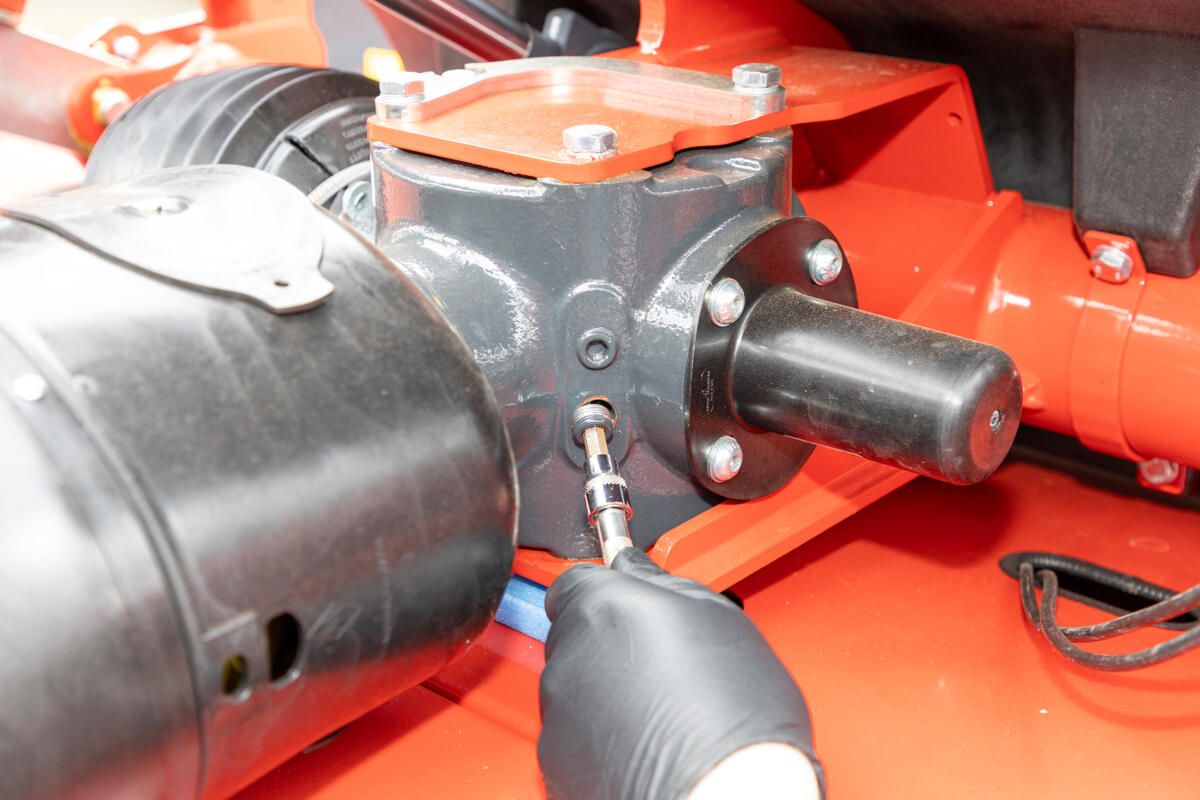
Replace gearbox oil annually
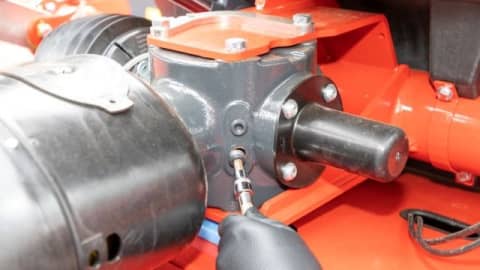
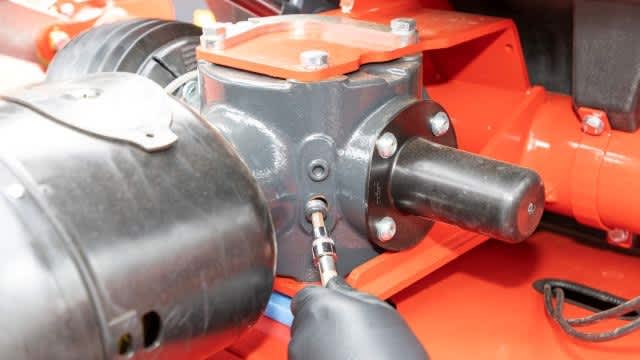
Main gearboxes on these models are reversible, and as a result, have two level plugs. The lower plug is the correct one to use for oil level checking. Withdraw the plug and the correct oil level should just be visible against the threads on the casing. “Pto guards and pto tubes also need to be checked, with damaged components being replaced,” he says. “Don’t over-grease bearings and joints, but do follow manufacturer’s guidelines.”
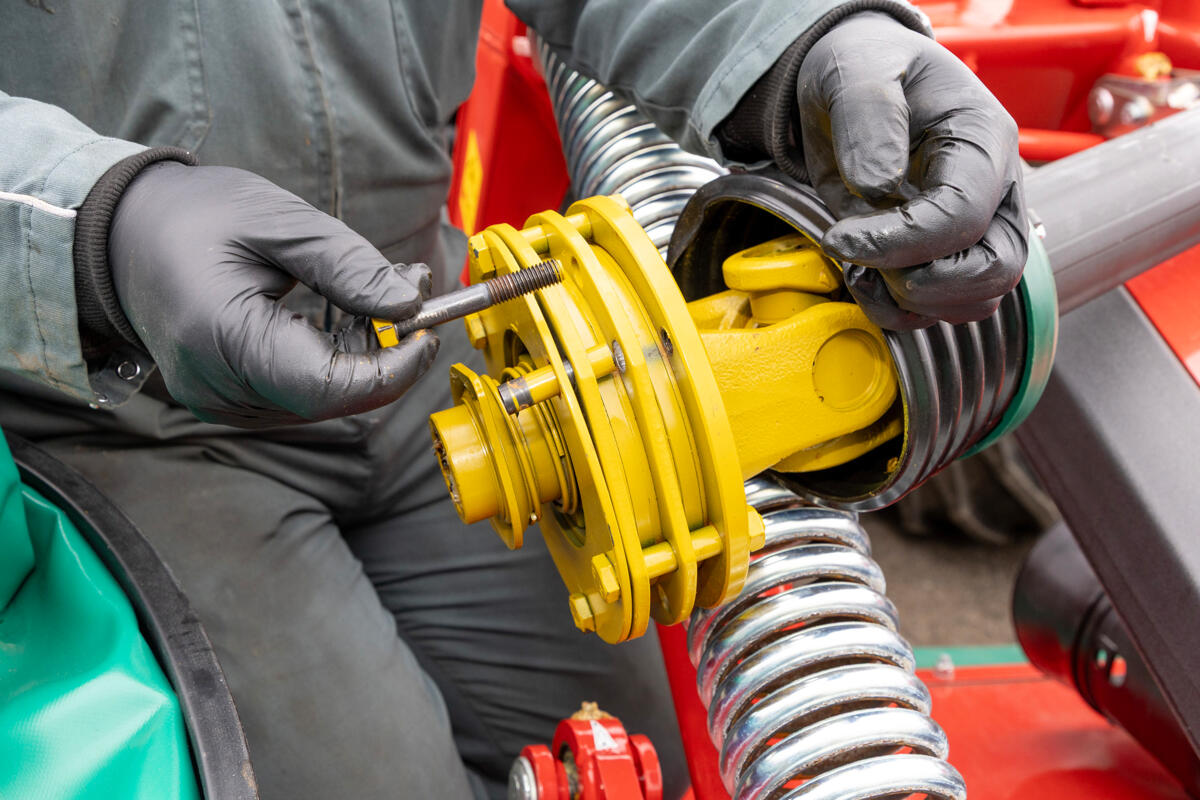
Slip clutches essential
Slip clutches are essential components that protect the driveline on Kverneland mowers. This model’s slip clutches use six bolts in combination with a Belville spring plate. Check plates are not stuck or seized onto their adjacent faces, and ensure they’ve not already been slipped or burnt – if so, they’ll need replacing. Note the depth tube that the bolts pass through, which ensures the correct tension is applied to the friction plates when the nut is bottomed out.
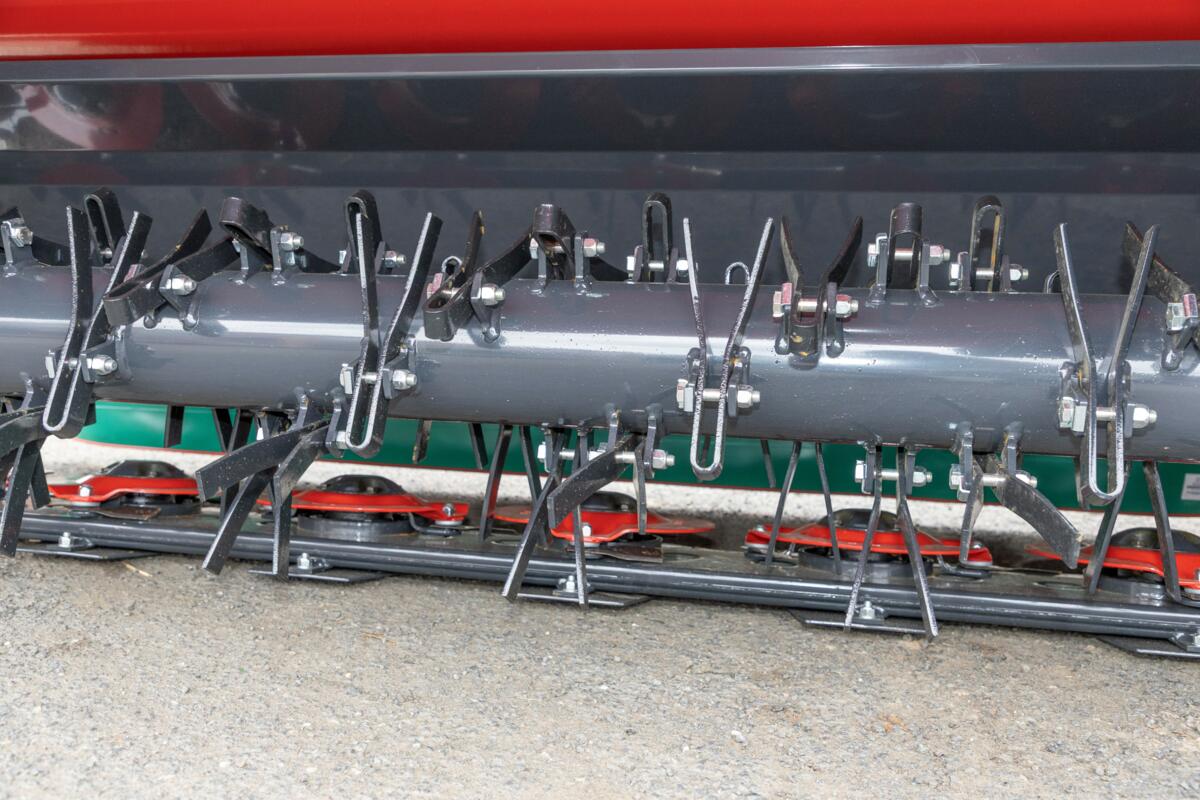
Steel tine conditioner
Check the conditioner for damaged or missing tines. On this semi-swinging tine, ensure all tines are free to move. It is also worth putting spanners across nuts and bolts used to secure high-speed rotating parts, suggests Mr Perry. It wouldn’t take long for a loose nut to let a tine go flying with potentially disastrous results.
Check mower bed oil
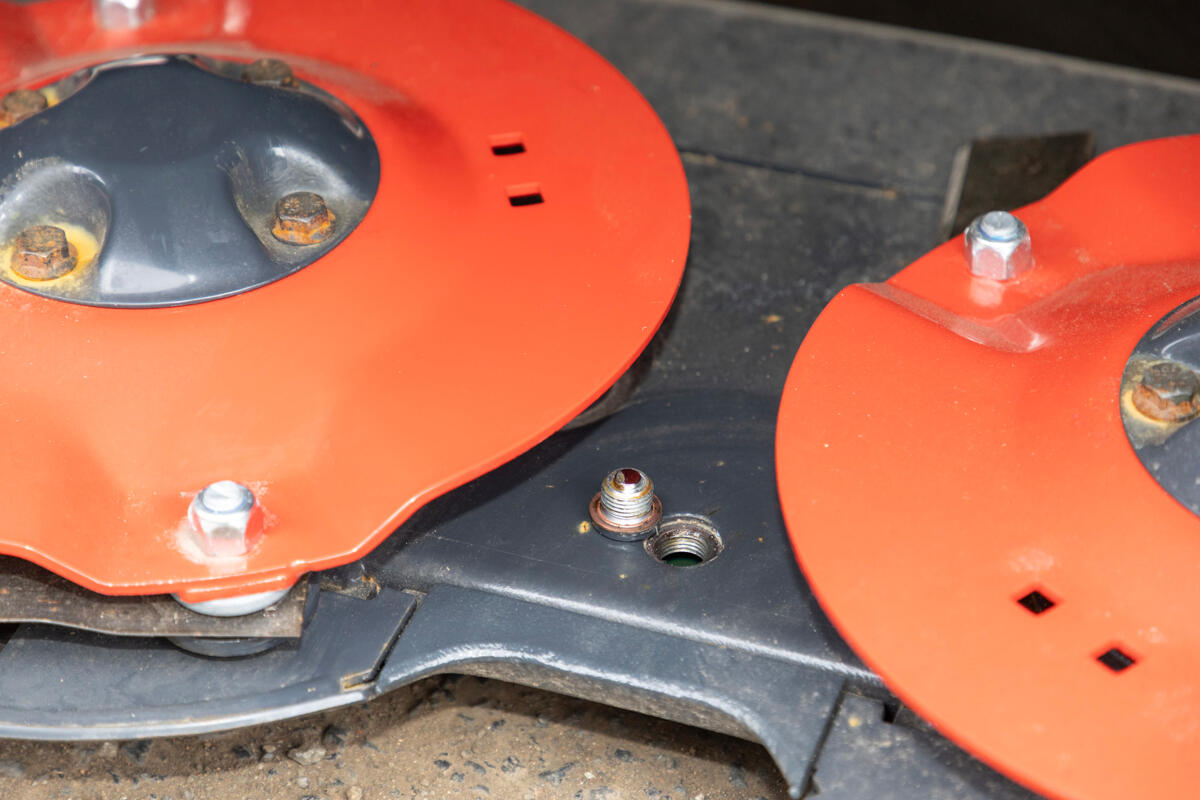
Mower bed oil should be replaced each season, but at the very least the oil level needs checking. Methods vary, so a handbook makes essential reading. Oil level on this 3332FT’s bed is checked by dipping, but only after the bed has been positioned and checked using a spirit level to ensure the bed is perfectly horizontal from left to right and front to back. “Remove the magnetic plug, which should be clean, and ensure there’s between 6-9mm depth of oil in the bed,” says Mr Perry.
Check and replace blades
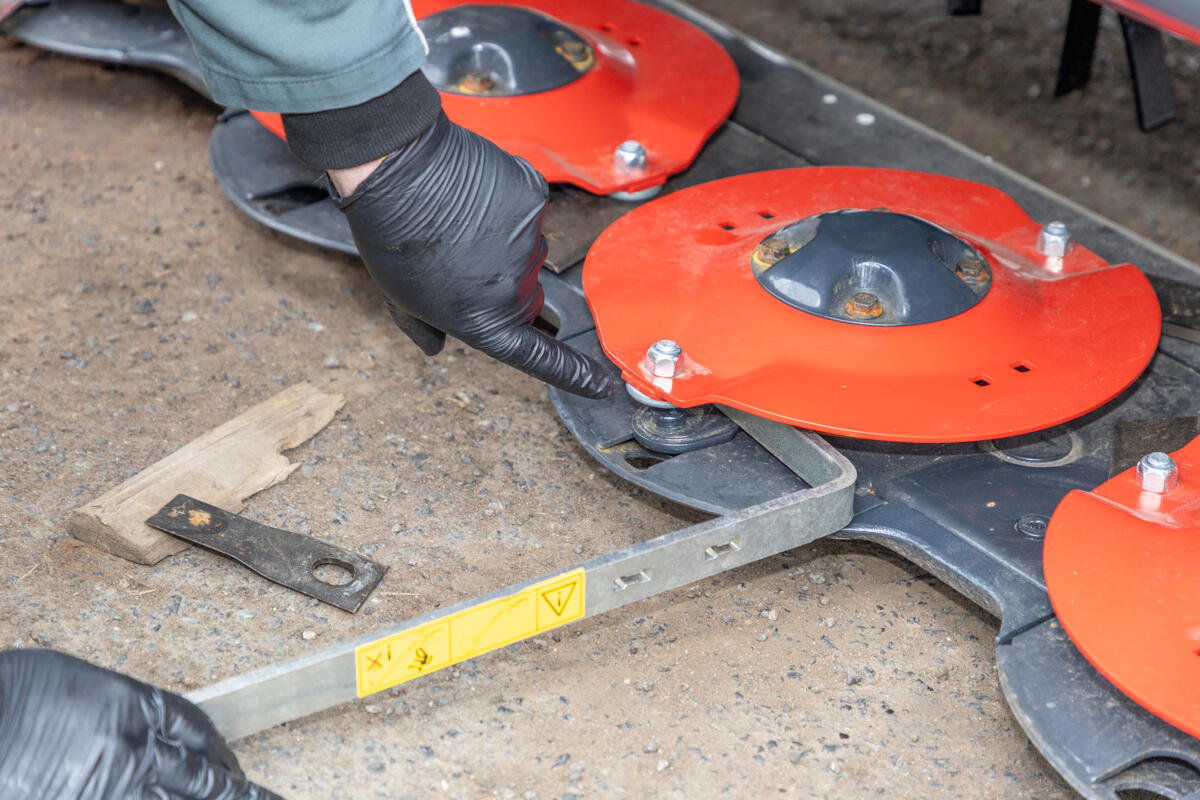
Remove the blades, paying close attention to blade holders and the securing pins. Doing so lets you check for cracking around bolt holes and it also lets you replace or free-up any stuck blades. Either, flip the blades to use an unworn edge – or replace with a new set to get the best performance and fuel efficiency from the outfit. Also check the condition of the skids below each disc and the adjacent filler plates between them, replacing any that are badly worn or missing.
Inspect pipework and hydraulic rams
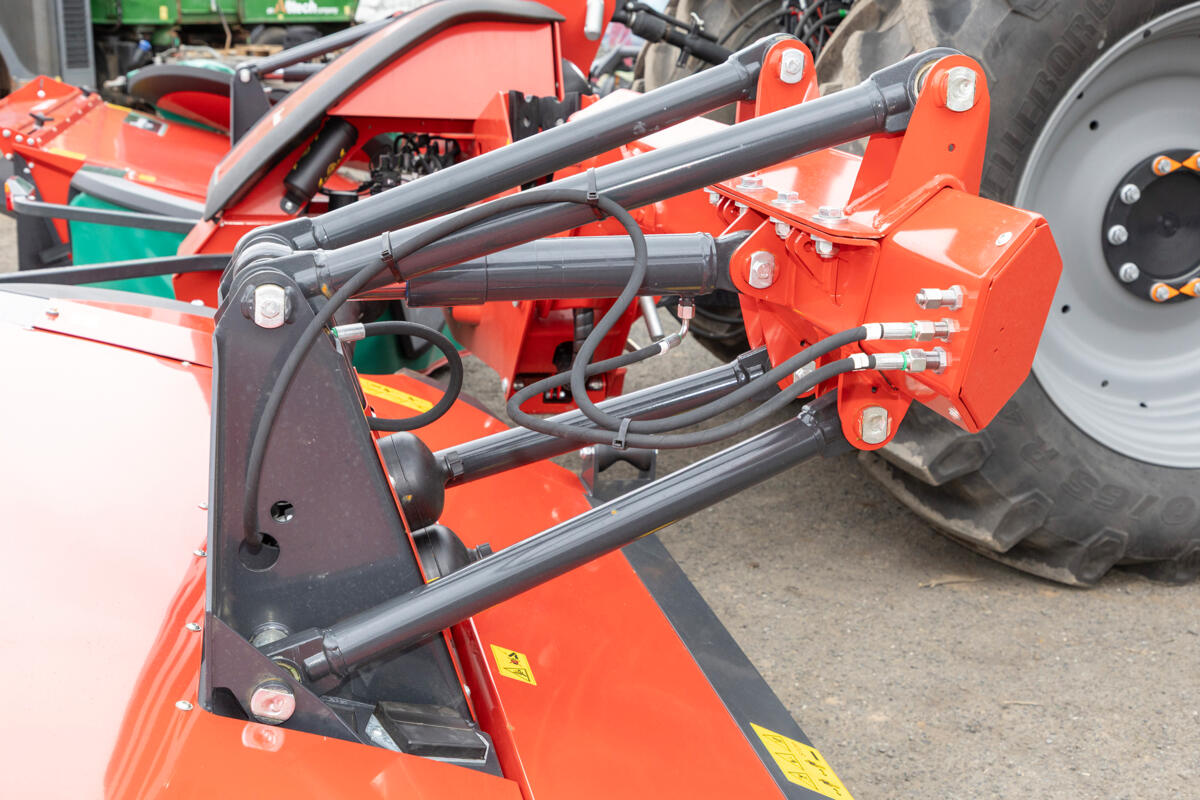
A visual check of hydraulic hoses, rams and seals will quickly identify areas that might require attention. This pipework is free of kinks and shows no signs of chaffing. Pay attention to pivots and linkages, checking for excess wear in any bushings, and lubricate where necessary.
Bed pitch important
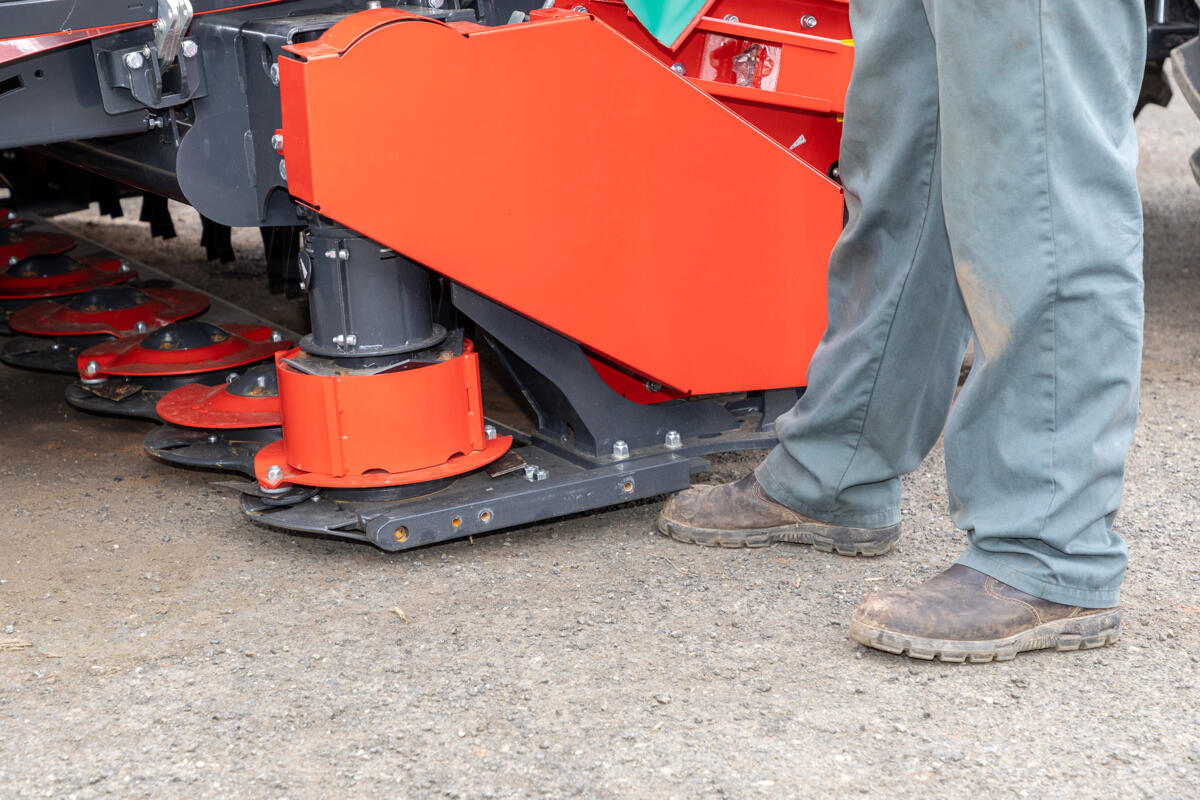
Setting bed pitch and cutting height on an A-frame-mounted front-mounted mower needs to A-frame to be set vertically, and at the correct height – see manual or machine decals for specific settings. “A useful starting point is to see if your boot will fit under the back edge of the mower bed when the unit is on the ground,” he says. “This indicates forward pitch is applied, and this can be fine-tuned in-field by adjusting a central link on the headstock, to add or remove bed pitch. In a 1-7 degree working range, 3-5 degrees is the optimum setting.”
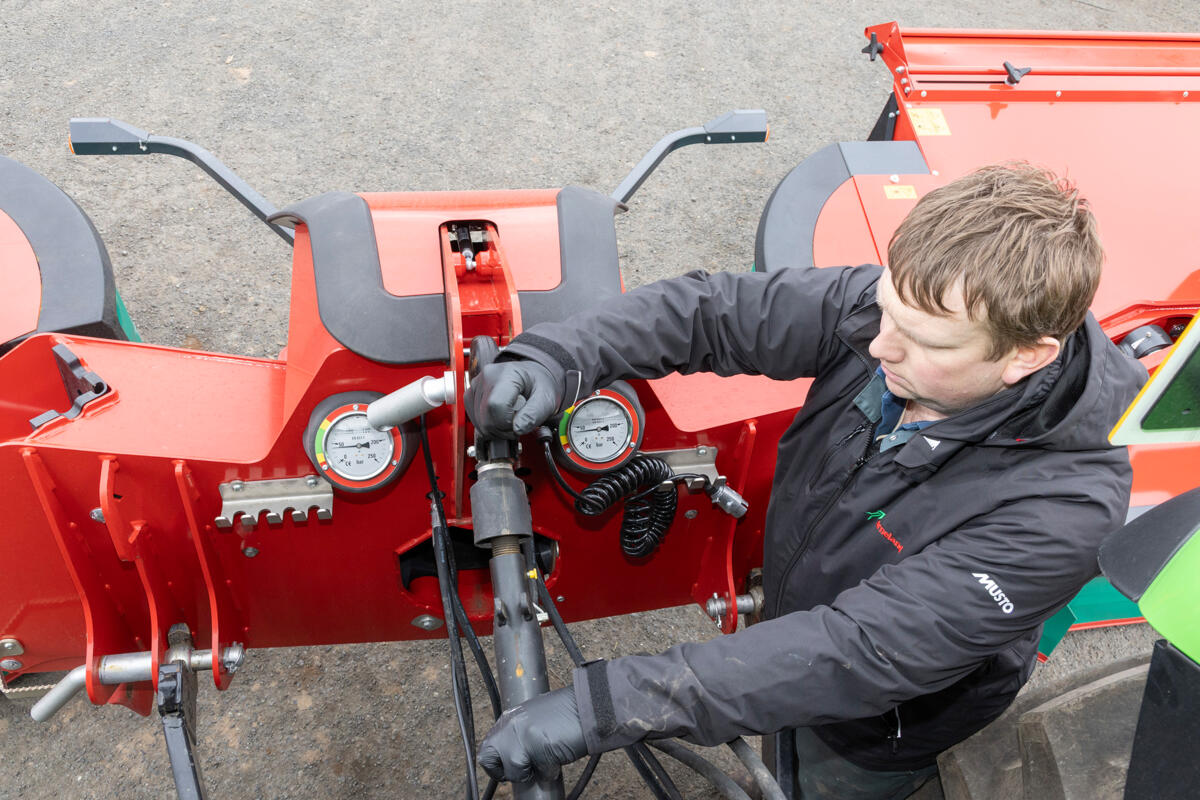
Setting bed float
Bed pitch for rear mounted mowers is adjusted using the tractor’s top link. Note pressure gauges for the hydraulic bed float on these two butterfly units. Pre-charge the pressure from the spools, aiming for 50 bar, as indicated by the green zone. The higher the higher the pressure, the more the beds will float. “Our front mower uses springs to set bed pressure, and you should be able to lift one end of the bed by hand, when correctly set,” he says. Note offset gearbox will shift weight to one side, so springs need setting at different lengths to create an even lift.